
Beginners Guide to High Protein Cooking
This post may contain affiliate links. If you purchase through my links, I may earn a small commission at no extra cost to you.
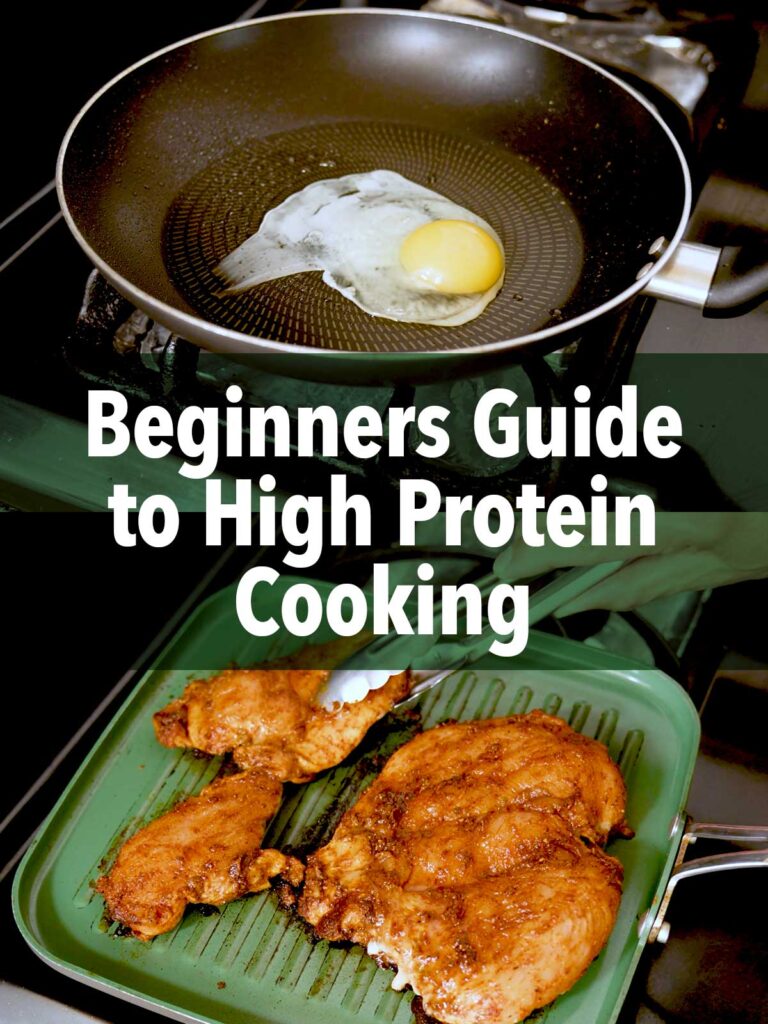
One question that I’ll get asked occassionally is where to begin when it comes to cooking high protein recipes and meals. It usually comes after they’ve watched a dozen or so recipe videos and they end up more confused than when they began, and I get it. When every video shows a new meal built from new ingredients, it starts to feel like you need a completely new grocery budget just to eat more protein.
If you asked me that same question, here’s what I’d tell you. You don’t need more recipes, at least not yet. I would have you start with a short list of staples you already know how to buy, a number for how much protein each meal should carry, and one or two techniques you can repeat every week. That’s a manageable system for a beginner, because the end goal is a small rotation of simple high-protein meals you can repeat all week. And if you can cook an egg and heat a pan, everything here is doable this week.
I built Flexible Feasts around this approach. I try to stick to recipes that use both everyday ingredients and cooking methods that take half hour at most. If the cooking takes over your life, you quit.
By the End of This
- How much protein to target per day and per meal, and where those numbers come from
- The short list of high-protein staples that cover breakfast, lunch, dinner, and snacks
- Which proteins are easiest to cook when you’re just starting out, and why
- A plate method that puts protein in every meal without weighing food, plus a simple first-week pattern you can copy
- The most common high-protein mistakes and the quick fix for each one
How Much Protein Do You Actually Need?
Before you buy anything, it helps to know how much protein you’re aiming for. And honestly, the number is a lot simpler than most of what’s online.
For years, the official U.S. recommendation was 0.8 grams of protein per kilogram of body weight, which comes out to about 0.36 grams per pound. That’s the bare minimum for avoiding deficiency, and it was never really built around feeling full or holding on to muscle. The 2025-2030 Dietary Guidelines moved the bar higher. Adults should now aim for 1.2 to 1.6 grams per kilogram, or 0.5 to 0.7 grams per pound, and the guidelines tell you to put protein at every meal. To make it concrete: if you weigh 165 pounds, the old floor was around 60 grams a day, and the new range puts you somewhere between 83 and 115.
Now you need to split that across the day. Research on muscle protein synthesis, which is how your body actually builds and repairs muscle, points to about 20 to 25 grams of protein per meal to get the full effect. Dietitians working with people who have higher goals usually push 30 to 40 grams. I keep mine in the 25 to 35 gram range, three or four times a day, and that keeps me inside the new guidelines without me counting a single calorie. If you want the full breakdown of that math for different body weights, it’s covered in my guide to how much protein you need per day.
The 2025-2030 U.S. Dietary Guidelines now recommend 0.5 to 0.7 grams of protein per pound of body weight each day, a 50 to 100 percent jump over the old minimum.
How Will I Know If I’m Hitting It?
Here’s the cheat sheet I keep around for reference, with rough protein amounts for the everyday staples you’ll be working with. While it’s helpful, you don’t need a scale for any of this. If you eyeball the portions, the numbers stay close enough to keep you on target.
- 1 large egg: about 6 grams
- 3 ounces of cooked chicken breast, a typical dinner portion: about 26 grams
- 1 cup of plain Greek yogurt: about 20 grams
- 1 cup of cottage cheese: about 28 grams
- 1 can of tuna, drained: about 25 grams
- 1 cup of cooked black beans: about 15 grams
- 1 scoop of protein powder: about 20 to 25 grams
Do the math for a dinner like the one in the plate section below: a palm-sized piece of chicken, a side of vegetables, and a cup of rice puts you at about 25 to 30 grams for the meal on its own. That’s the whole point. You get a real number for what’s on your plate without ever weighing it.
High-Protein Staples to Keep on Hand
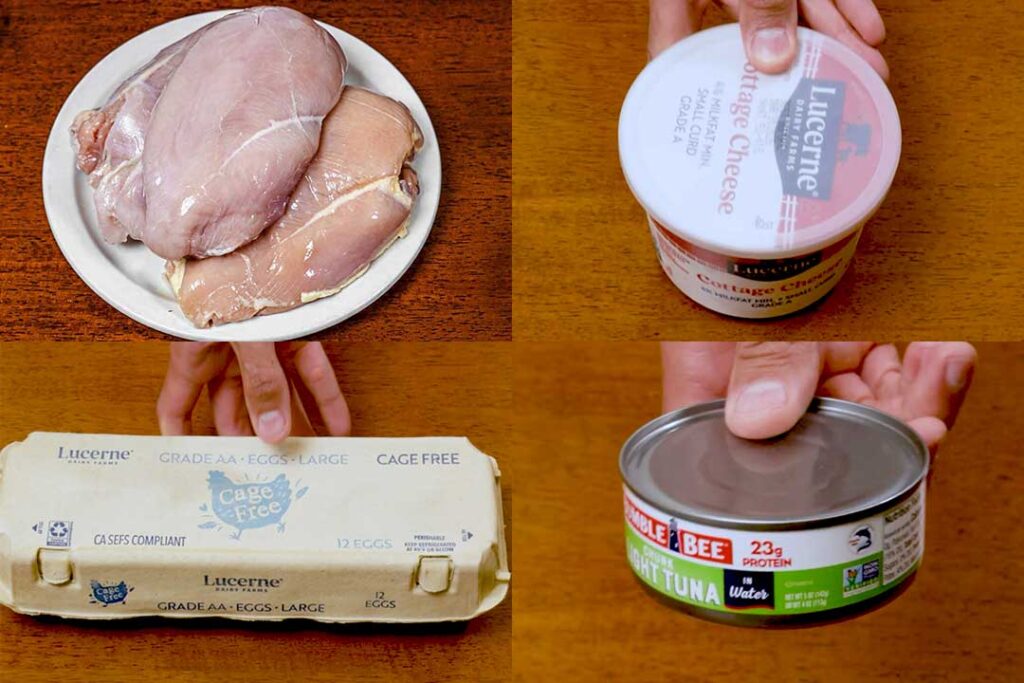
Here’s the part most of the recipe articles skip. This starts in the grocery cart, not on the stove. When I’m setting up a kitchen for someone new, I point at the same handful of things every single time.
The list for staples is short and simple. Eggs, Greek yogurt, and cottage cheese cover breakfast and snacks with barely any work. Chicken breast, canned tuna, and frozen shrimp handle lunch and dinner. Beans, dried or canned, round everything out and keep the bill down. And if you’re into protein powder, one 2 lb tub is enough for smoothies and the occasional bake.
The reason I pick these is simple. Three of them don’t need any cooking, and the rest only need the techniques in the next section. When your pantry looks like this, eating enough protein stops being a decision you make every day and becomes a habit.
Regarding cost, which is a question I get often. Beans, eggs, and canned tuna are some of the cheapest protein you’ll find at most U.S. stores. If the week gets tight, I would rely on those budget-friendly staples to help get you through the week. For a longer look at this, I’ve broken down my 7 cheapest high protein foods, and it’s basically the same list as above.
If you eat vegetarian, the list still works the same way, with eggs, beans, Greek yogurt, and cottage cheese carrying the protein in most vegetarian high protein recipes.
What Is the Easiest Protein to Cook?
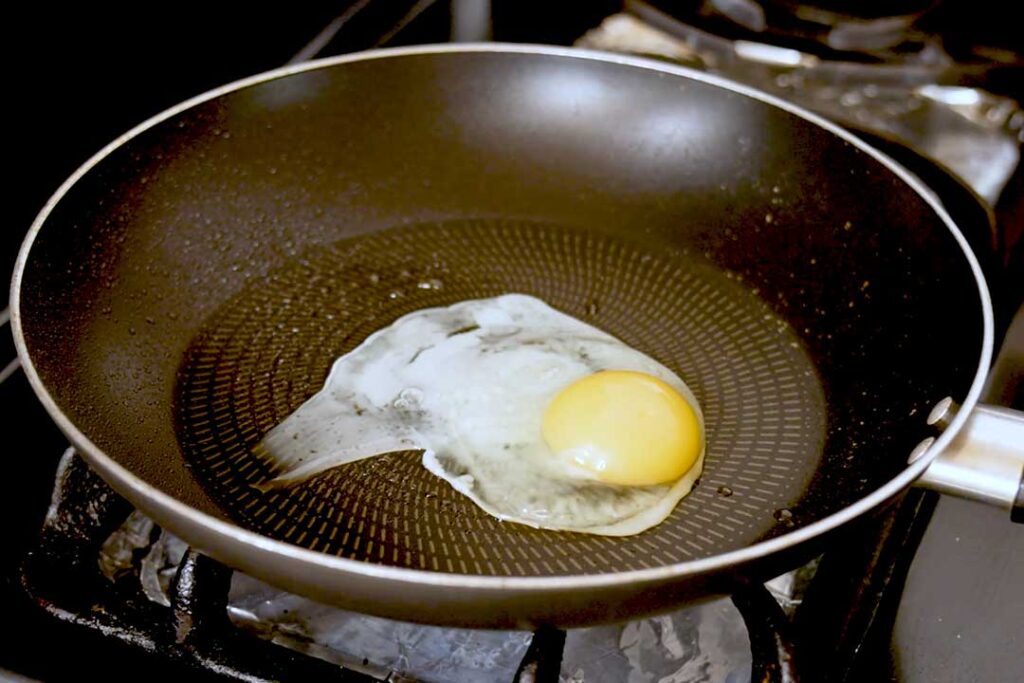
The easiest protein to cook in my opinion is the egg. In fact, that’s how I started back in 2016. I would normally cook 2 eggs for breakfast and pair it with a bowl of protein oatmeal.
Eggs are where I start every single beginner. They’re cheap, each one has about 6 grams of protein, and they teach you the one skill everything else depends on: watching the heat. If you can make a scramble without burning the pan, you can handle chicken. Canned tuna is a close second. It’s already cooked, a can costs two dollars or less, and it becomes a sandwich, a grain bowl, or a pasta dish in five minutes.
Then there’s the no-cook tier of staple ingredients. Greek yogurt, cottage cheese, string cheese, and the hard-boiled eggs you make once and keep in the fridge. A cup of Greek yogurt gives you about 20 grams of protein and takes no effort other than scooping it in the bowl. That’s what you eat on the nights when cooking just isn’t happening, and your week stays on track because of it.
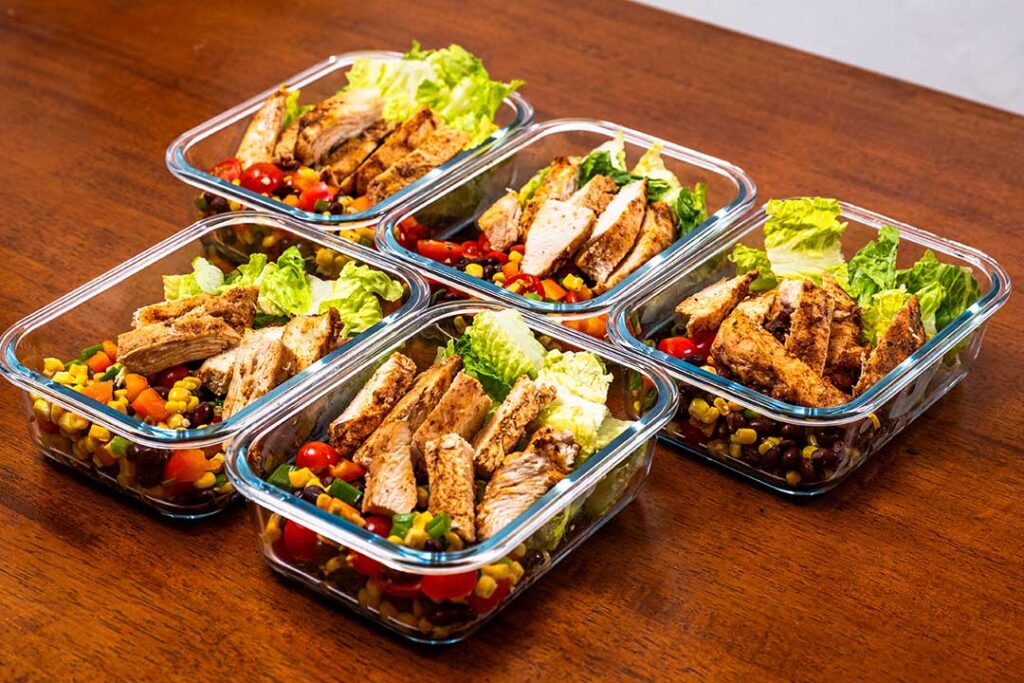
For the stuff that goes on the stove, chicken breast is my default. It’s lean, it’s cheap per serving, and it forgives mistakes that would ruin a steak or a piece of fish. The habit I push hardest is batch cooking (or meal prepping). Roast or pan a big batch on the weekend, slice it, and use it across three or four meals that week. Do that once and most of your weeknights stop requiring you to cook a protein from scratch.
Building a High-Protein Plate Without Doing Math
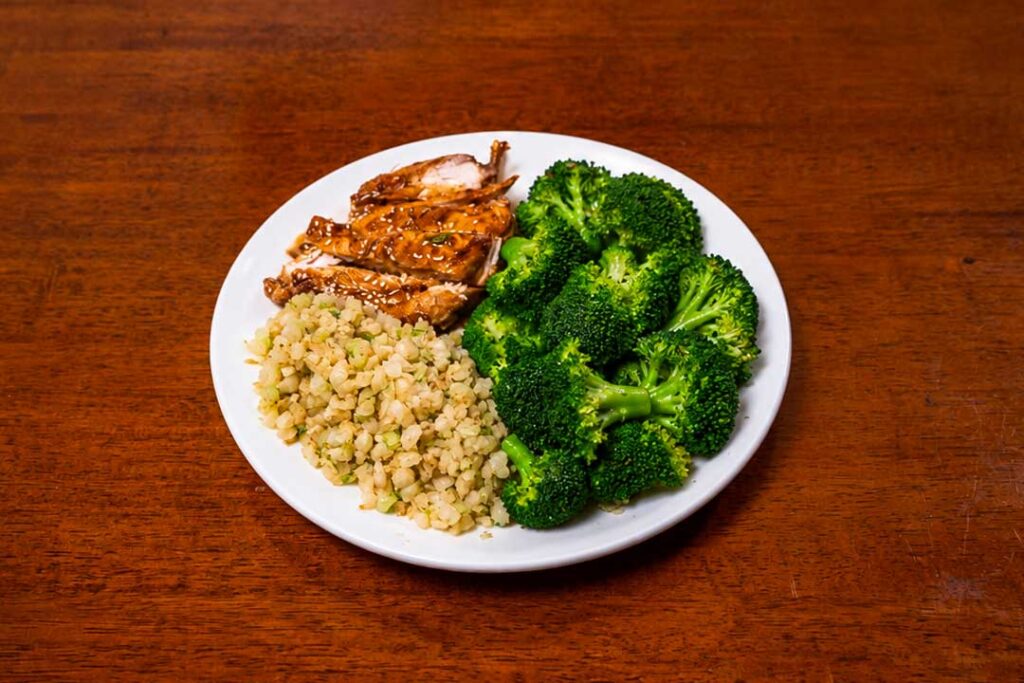
The targets above are a lot easier to hit when you stop doing math and use the plate method, the one Harvard popularized: half the plate vegetables or fruit, a quarter grains or starchy carbs, and a quarter protein.
The tweak for high protein eating is small. Keep the same ratios, just make that protein quarter actually generous. A quarter plate of chicken or shrimp usually lands you in the 25 to 35 gram target on its own. For breakfast, a cup of Greek yogurt, a cup of cottage cheese, or two eggs with some cheese does the same job. The grain quarter is your choice: rice, potatoes, pasta, oats, whatever you like.
The other habit I’d build is protein first, every meal, starting with breakfast. Breakfast is where most people eat the least protein of the day, and that puts the whole day’s target on dinner. When I make a Greek yogurt bowl in the morning, the rest of the day gets easy because the hardest meal is already handled.
Your First Week, Mapped Out
If the plate method still feels abstract, here’s the week I put together for someone new to this. It runs entirely on the staple list from above, and you only cook two proteins from scratch all week to keep it simple and easy.
On Saturday or Sunday, you do two things: hard-boil a dozen eggs and cook up a batch of chicken. That’s the whole cooking session, and it takes an hour at most. Everything else in the week is assembly, not cooking.
Breakfast runs on a no-cook rotation consisting of a Greek yogurt bowl, scrambled eggs, or a protein smoothie on the mornings you’re in a rush. Lunch is a tuna or egg sandwich, or the batch chicken over a grain. Dinner is a quarter plate of sliced chicken with vegetables and a grain, or something no-cook on the nights when it’s just not happening. Snacks are a string cheese, more yogurt, or a small handful of nuts when you’re still a little hungry.
Notice what isn’t in this week: A bunch of new ingredients, fancy equipment, weighing your food, or planning at late hours. Most people land around 90 to 110 grams of protein a day on this pattern, which puts them inside the new guidelines without counting a thing. And by the end of the week, the pattern starts to feel like nothing.
And you really don’t need a scale for any of it. A palm-sized portion is a decent guide, but the truth is that showing up every day matters more than getting the grams exact. A quarter-plate of protein at every meal will beat an exact gram count you only hit sometimes.
Common High-Protein Mistakes Beginners Make
I’ve watched a lot of people start this, and the same mistakes show up every time. The good news is that each one has a quick fix.
The most common is primarily leaning on shakes and bars to hit your protein goals. They’re fine as a backup but the American Heart Association lists relying on powders and bars as one of the top protein mistakes, and I’m right there with them. When the bar replaces the meal, you lose the vegetables, the fiber, and the fullness that come with real food. They’re better off as supplements to help your reach your goal if you’re short for the day.
The second one is letting protein crowd everything else out. Bigger portions of meat and cheese leave less room for produce, grains, and legumes, and this is exactly the pattern dietitians warn about when people focus too hard on one macro. The plate method above keeps the balance without you thinking about it.
The third is skipping the training. Extra protein only builds extra muscle if your body has a reason to build it, and that reason is lifting weights or some other resistance work. Two or three short sessions a week makes a real difference in how your body uses what you eat.
And the last one is the sneaky one. People quit because the food got boring. Seasoning, marinades, and a small rotation of recipes you actually enjoy will keep you going further than any new supplement. Boring is the real enemy here, not the grocery bill.
What to Remember
- Aim for 0.5 to 0.7 grams of protein per pound of body weight per day, the current U.S. guideline range, which works out to roughly 25 to 35 grams across three or four meals.
- Stock the same short list every week: eggs, Greek yogurt, cottage cheese, chicken breast, canned tuna, frozen shrimp, beans, and one protein powder. That list covers every meal and snack.
- Eggs are the easiest protein to learn and chicken breast is the easiest meat. Batch cook the chicken once a week to remove most of the effort.
- Build every plate the same way: a quarter lean protein, half vegetables, and a quarter grains or starchy carbs. Then run the same simple week: batch cook two proteins on the weekend and let the no-cook tier carry breakfast. You don’t need a food scale.
- Don’t let bars and powders replace real meals, keep protein beside your vegetables and grains instead of squeezing them out, and pair your intake with two to three strength sessions a week.
Things Worth Knowing
-
The Sunday Boil
Hard-boil a dozen eggs on the weekend. They keep for about a week in the fridge and turn into instant lunches, snacks, and salad toppers all week long.
-
Batch Chicken
Season a pound or two of chicken breasts, roast them at 400 degrees Fahrenheit for about 20 to 25 minutes until they hit 165 degrees inside, then slice and store. That one batch feeds several meals and removes cooking from most of your week.
-
The Pantry Safety Net
Keep four or five cans of tuna and a few cans of beans on hand. They’re the cheapest insurance you can buy for the weeks when nothing else gets cooked.
-
Breakfast First
Put 25 to 30 grams of protein into breakfast, whether that’s Greek yogurt, eggs, or a protein smoothie. The rest of the day gets a lot easier once the lowest-protein meal is solved.
-
Season Aggressively
High protein eating is only as sustainable as it tastes. Salt, pepper, garlic, hot sauce, a squeeze of lemon, whatever you like. Flavor is the real barrier to sticking with it, and it’s the part you fully control.
FAQs
-
What is the easiest protein to cook for a beginner?
The egg, without question. It’s cheap, it cooks in a few minutes, and it teaches you heat control, the skill behind every other pan-cooked protein. If you want to skip cooking entirely, canned tuna and Greek yogurt are already done for you. Chicken breast is the easiest meat once you have a feel for a pan.
-
What are lazy ways to get more protein?
Start with things that don’t require any cooking such as Greek yogurt, cottage cheese, canned tuna, and hard-boiled eggs made in a single weekend batch. A protein smoothie or greek yogurt bowl covers a busy morning in about two minutes. If you batch cook chicken on the weekend, most of your week runs on protein that’s already done.
-
How do I get protein when I can’t cook?
Good news. You don’t have to cook to hit a decent number of protein. A cup of Greek yogurt has about 20 grams of protein, a cup of cottage cheese has about 28, and a can of tuna has about 25, all with no effort. You can combine greek yogurt and cottage cheese with protein powder to boost the protein amount even more. Protein shakes, string cheese, and blocks of cheese fill the remaining gaps. If these carry most of your days, your total is fine, as long as you rotate them so meals stay varied.
-
What food is 100% protein?
Honestly, none of them are 100% pure protein although there are some sources that come close to it. Every whole food contains water, some fat, and some carbs, so nothing you’d eat in a normal meal is 100% protein. The closest real foods are lean meats, egg whites and fish, which land around 25 to 30 grams of protein per 3.5 ounces, plus whey protein concentrate at roughly 75 to 80 percent protein by weight.
-
Do high protein recipes help with weight loss?
Most of the benefit comes from fullness. A quarter plate of protein at every meal keeps you fuller than a plate built around carbs alone, and lean staples like chicken, eggs, beans, and Greek yogurt keep the calorie count reasonable. That’s what makes high protein recipes for weight loss a good starting point, as long as your total calories still fit your goal.
-
How much protein per meal should a beginner eat?
Aim for 25 to 35 grams per meal, three or four times a day. Research suggests muscle protein synthesis responds fully to about 20 to 25 grams of quality protein in a single meal, so this band gives you a buffer while staying realistic. Four meals in that range lands most adults comfortably inside the current U.S. guidelines.
Related Recipes You’ll Love
The three below are the ones I point new cooks to first. Lemon Pepper Chicken is the easy high-protein dinner of the group, a high-protein dinner recipe you can batch on the weekend and eat through the week. The other two handle the mornings.
- Lemon Pepper Chicken
The batch cooking centerpiece of this guide. One pan, one flavor that carries a plain side dish into a real dinner. - Mixed Berry Protein Yogurt
The no-cook breakfast that solves the lowest-protein meal of your day in about five minutes. - Apple Vanilla Protein Smoothie
Your two-minute answer for busy mornings and the days when cooking isn’t happening at all.
Take This Further
The system in this guide runs on a short list and one plate formula, and the fastest way to make it yours is to cook something this weekend. Start with one of the recipes above, or browse the full library and pick whichever one you’d actually enjoy eating.
Browse the Full Recipe Library →
Sources:
- Dietary Guidelines for Americans 2025-2030 (Official PDF)
- Harvard T.H. Chan School of Public Health, Nutrition Source
- Harvard Health Publishing
- Consumer Reports
- Morton et al. 2018, Sports Medicine (PubMed)
- Harvard T.H. Chan School of Public Health, Healthy Eating Plate
- Mayo Clinic Health System
- American Heart Association
- Healthline