Gochujang Korean Chicken Bowls
This post may contain affiliate links. If you purchase through my links, I may earn a small commission at no extra cost to you.
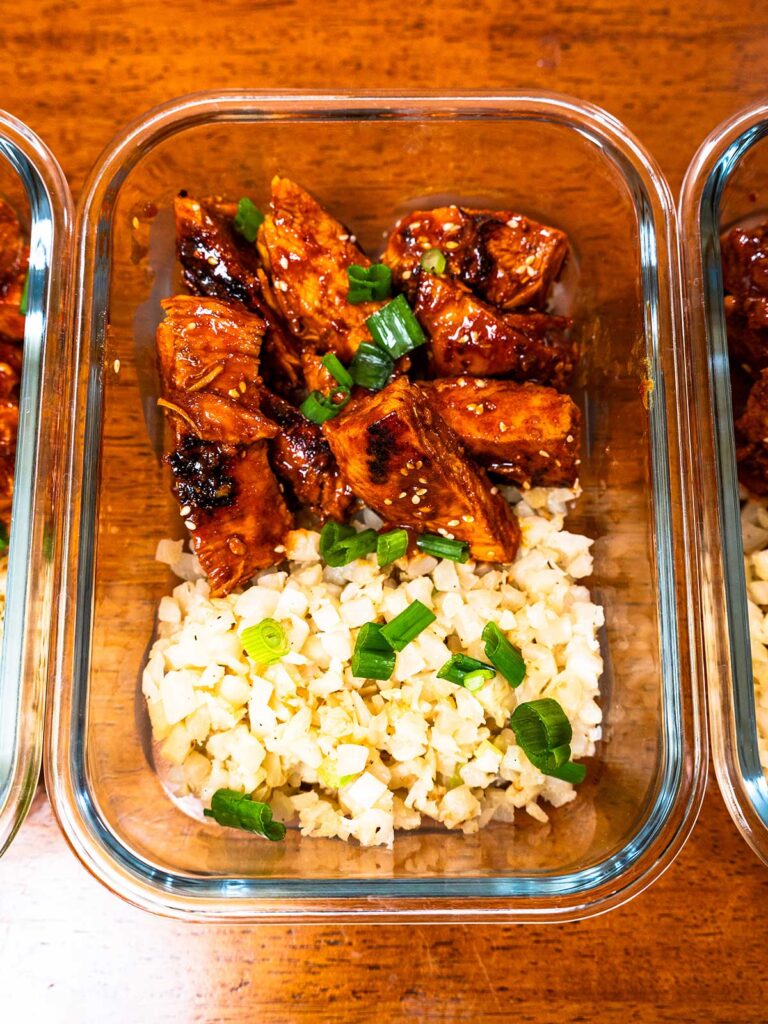
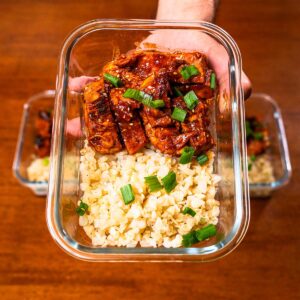
This protein packed gochujang chicken recipe delivers 54 grams of protein per container while keeping carbs low and flavor high. The sticky gochujang glaze turns simple chicken breasts into something that tastes like it came from a Korean restaurant, and the whole thing comes together in one skillet. Great for meal prep days when you want something that actually keeps you full through a busy afternoon.
What Makes This Actually Good
- The marinade gets split in half so you sear the chicken with flavor, then finish with a clean gochujang glaze that sticks to every piece. Most recipes skip this step and end up with chicken that tastes good on the outside but misses that sticky finish. The marinade approach here is similar to what I use in the Healthy Sugar Free Teriyaki Chicken, just with gochujang instead of teriyaki sauce.
- Cauliflower rice keeps the carb count down while still giving you a filling base that soaks up extra sauce when you bowl it up.
- The gochujang paste brings fermented depth and warmth, not just straight heat. This gochujang sauce recipe builds flavor layer by layer as it simmers down into a sticky glaze.
- 54 grams of protein per container makes this one of the highest protein meal prep options I have put together. 4 containers, each one packed and ready for the week.
Ingredients
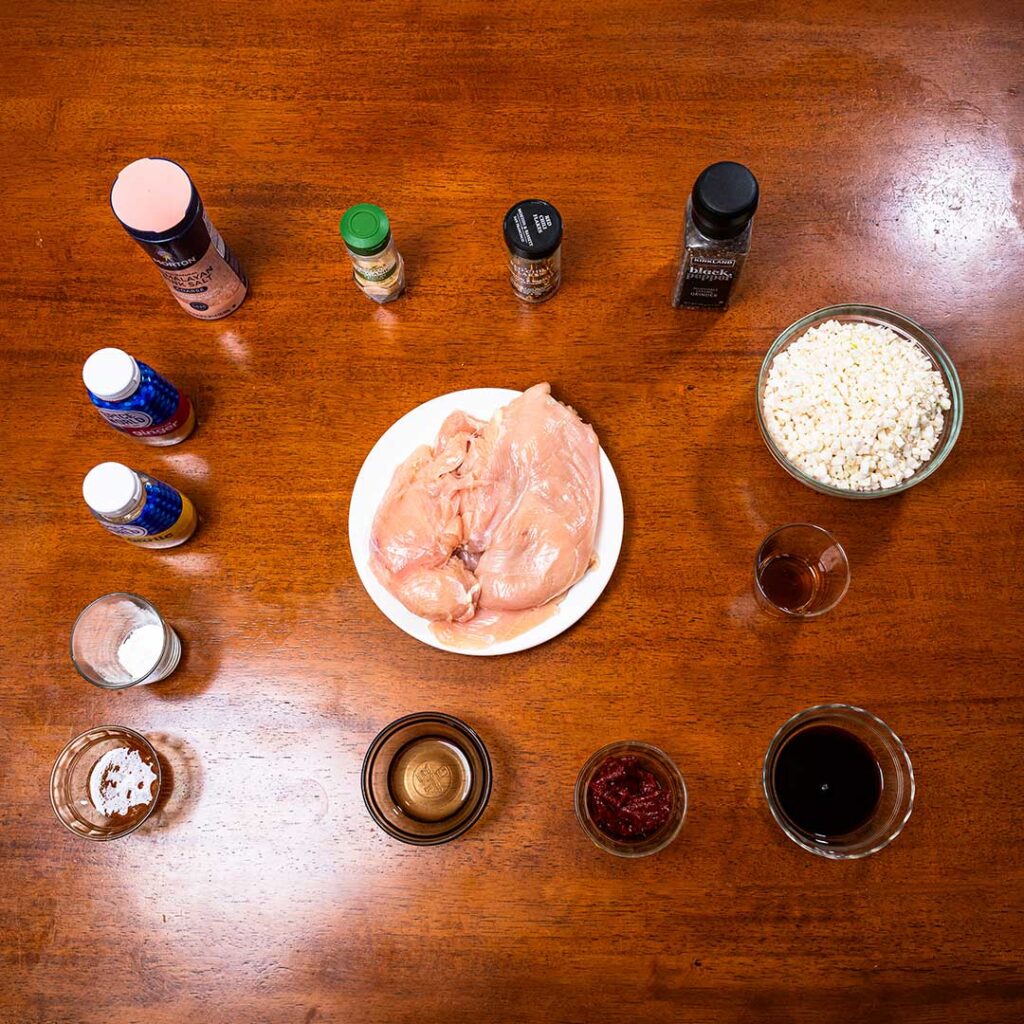
- Boneless Skinless Chicken Breasts. This is the main protein source. 2 pounds gives you enough for 4 solid meal prep containers with room to eat generous portions throughout the week.
- Gochujang Paste. Adds fermented Korean chili warmth and a subtle sweetness that builds into a sticky glaze when it hits the pan. You can find it in the Asian section of most grocery stores.
- Soy Sauce. Low sodium soy sauce keeps the sodium from running too high since gochujang already brings saltiness to the table.
- Honey. Just enough to balance the heat from the gochujang and give the glaze that sticky sheen. Drop it to one tablespoon if you want to cut the sugar further.
- Rice Vinegar. Brings a bright acidity that cuts through the richness and keeps the whole marinade from tasting heavy on your palate.
- Sesame Oil. A little goes a long way here. It adds that classic Korean restaurant aroma without adding much in the way of extra calories.
- Minced Garlic. Three fresh cloves or a teaspoon and a half from the jar. The squeeze bottle version saves prep time and stays fresh longer in the fridge.
- Minced Ginger. Fresh or jarred both work fine here. It adds a warm bite that makes the marinade taste more complex than the ingredient list suggests.
- Onion Powder. Adds a mild savory backbone without adding chunks of onion that change the texture of the marinade.
- Salt. Seasons everything evenly. Since gochujang and soy sauce both bring salt, start conservative and taste before adding more.
- Black Pepper. A standard pantry staple that rounds out the spice profile alongside the chili flakes.
- Red Chili Flakes. Adjust these based on your heat tolerance. Start with half a teaspoon if you prefer flavor over fire.
- Cauliflower Rice. Twelve ounces gives you a low carb base that cooks fast and takes on the gochujang glaze nicely when you bowl it up.
- Sesame Seeds. A light sprinkle on top adds crunch and that nutty finish that makes the bowl look like it came from a restaurant.
- Green Onions. Sliced thin over each container right before sealing. They add a fresh onion pop that keeps the meal from tasting stale by midweek.
The Case for Making This
- 54 grams of protein per container is serious fuel for busy weekdays when you need something that keeps you full and focused.
- The gochujang glaze turns basic chicken breasts into something that tastes like takeout but actually works with your nutrition goals.
- Everything cooks in one skillet, which means less cleanup and faster weeknight cooking when you already have a full plate.
- 4 containers come out the other side ready to grab and go, with no reheating guesswork or microwaving something that turns out dry by Thursday.
- Gochujang is a fermented paste with deep, complex flavor that makes this Korean rice bowl taste like it came from a restaurant, even though the method is straightforward.
- Lower carb base with cauliflower rice means you get the volume of a full bowl without the food coma that comes from a heavy rice portion.
Building a Meal Around This
- For more comfort and to balance the gochujang heat, swap in steamed jasmine rice for a classic chicken rice bowl. Or try making Coconut Curry Brown Rice as a different flavor profile to bowl the chicken over.
- A simple cucumber salad with rice vinegar and sesame oil. Keeps things light when the bowl already feels substantial
- Edamame sprinkled on top for extra plant protein and a pop of color that makes the container look better in photos. If you want to swap the side entirely for something breakfast style, Cottage Cheese Overnight Oats comes together the night before with no cooking.
- Shredded carrots mixed into the cauliflower rice. Adds sweetness and crunch without any extra work
- A side of miso soup. Filling enough to turn this into a full Korean inspired meal when you have extra time
Ways to Make This Yours
- Chicken thighs instead of breasts. They stay juicier during cooking and bring a richer flavor, though the protein drops to around 46 grams per container. If you want something crispy instead, the Almond Flour Parmesan Chicken Tenders use a similar cooking method with a crunchy coating.
- Tofu or tempeh in place of chicken. Press firm tofu first, then marinate and pan fry it the same way for a plant based version with about 28 grams of protein per serving. If you want to stick with chicken but try a different flavor profile, the Chicken Fajitas use a similar bowl format with peppers and onions. For a completely different style of bowl, Sweet Potato BBQ Shepherd’s Pie follows the same meal prep logic with a different set of flavors.
- Dairy free by skipping the honey and using maple syrup or a liquid sweetener instead. The rest of the recipe is already dairy free by default.
- Spice it up with an extra teaspoon of red chili flakes or a drizzle of sriracha if you like more heat.
- Add a fried egg on top when reheating. The runny yolk mixes with the gochujang glaze and creates a rich sauce that coats every bite.
Things Worth Knowing
-
Marinating Time
Let the chicken sit in the marinade overnight if you can. Thirty minutes works in a pinch, but the flavor penetrates much deeper with a longer soak.
-
Heat Level
Gochujang is more fermented and complex than just spicy. It brings warmth without overwhelming heat, but adjust the chili flakes to match your tolerance before you start cooking.
-
Saving the Clean Marinade
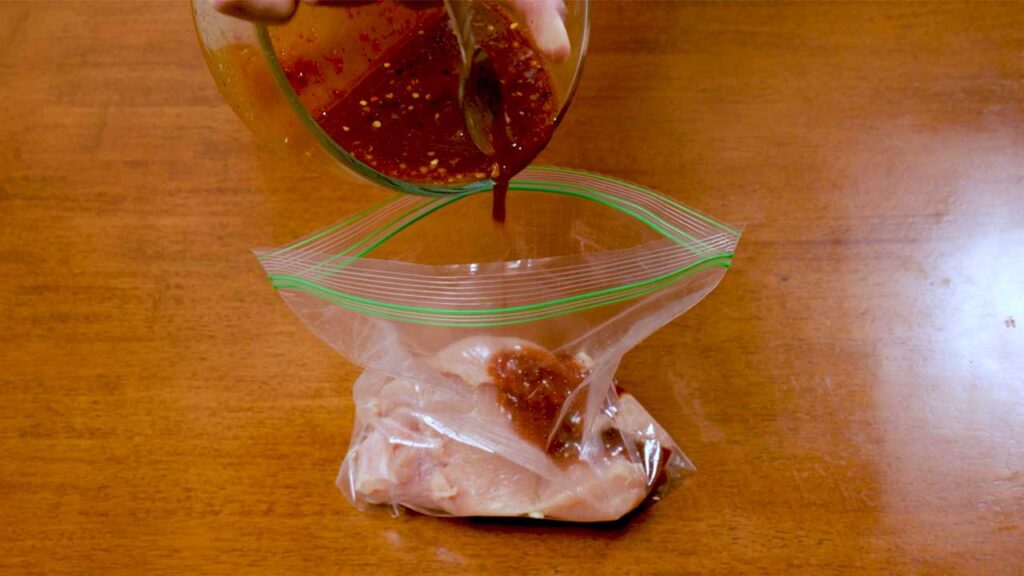
Set aside half the marinade before it touches raw chicken. This is the portion that becomes your finishing glaze, so keep it in a separate bowl and do not cross contaminate.
-
Cauliflower Rice Tips
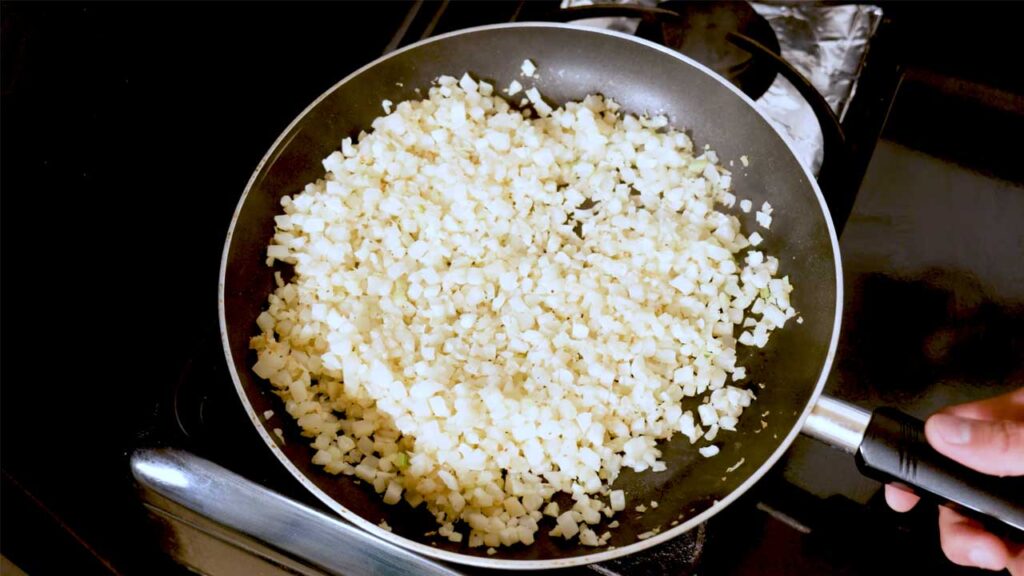
If using frozen cauliflower rice, thaw it first and squeeze out excess moisture. Wet cauliflower rice steams instead of frying, and you miss out on the browning that adds flavor.
-
Storage Window
These containers stay good in the fridge for up to 4 days. The gochujang glaze actually gets better on day two as the flavors settle into the chicken. If you want another meal prep option that stores just as well, the Southwest Chicken Soup keeps for about the same window and reheats well.
FAQs
-
Is gochujang very spicy?
Not really. Gochujang is a Korean chili paste with fermented depth, a touch of sweetness, and moderate heat. It tastes more complex than just hot. You can always add extra chili flakes if you want it spicier.
-
Can I use white rice instead of cauliflower rice?
Yes, swap in about one cup of cooked jasmine rice per container. You will lose some protein density and gain roughly 45 extra carbs per serving, but the flavor pairing works either way. If you want a lighter carb option instead, the Southwest Chicken Salad Meal Prep skips the rice entirely and keeps things fresh.
-
How do I reheat these without drying out the chicken?
Add a teaspoon of water before microwaving and cover the container with a damp paper towel. The steam keeps the chicken moist while it heats through in about ninety seconds on high.
-
Where do I find gochujang paste at the store?
Look in the Asian or international foods aisle, usually near the soy sauce and sesame oil. Most larger grocery stores carry it. If you cannot find it, Korean chili flake with a bit of brown sugar is a backup option.
-
Can I freeze these meal prep containers?
You can, but the cauliflower rice texture changes after freezing and becomes softer when reheated. For best results, eat within four days or freeze just the chicken portion and cook fresh cauliflower rice when you reheat. If you want another recipe that freezes better, the Baked Chicken Nuggets hold up well in the freezer and reheat just as crispy.
-
What is the nutritional profile of this recipe?
Each container has about 420 calories, 54 grams of protein, 24 grams of carbs, and 12 grams of fat. The high protein count makes it great for muscle building or staying full through long workdays.
Equipment Needed
Recipe
Gochujang Korean Chicken Bowls
Ingredients
Directions
- In a large bowl, whisk together gochujang, soy sauce, honey, rice vinegar, sesame oil, garlic, ginger, onion powder, salt, black pepper, and red chili flakes to make the marinade.
- Place the chicken into a bag or bowl. Pour half of the marinade over the chicken and toss to coat, then cover and refrigerate for at least 30 minutes, preferably overnight. Set the remaining half of the marinade aside in a separate bowl to use later as your sauce.
- While the chicken marinates, heat a large nonstick or stainless skillet over medium heat with a light drizzle of neutral oil.
- Add the cauliflower rice to the skillet and season with a pinch of salt and black pepper.
- Cook and stir (about 5–7 minutes for raw riced cauliflower or 3–5 minutes if using thawed pre-cooked/frozen cauliflower rice) until tender, then transfer to a bowl or your 4 containers and set aside.
- Return the skillet to medium to medium-high heat with a little more oil if needed.
- Let excess marinade drip off the chicken (discard any marinade left in that bowl), then place the chicken in the hot skillet in a single layer.
- Sear the chicken for 3–5 minutes per side until nicely browned, then reduce the heat slightly and continue cooking, flipping as needed, until the thickest part reaches 165°F (74°C), about 10–14 minutes total depending on thickness.
- Once the chicken is done cooking, remove it from the pan and let it rest on a plate. Cut it into whatever size pieces you prefer.
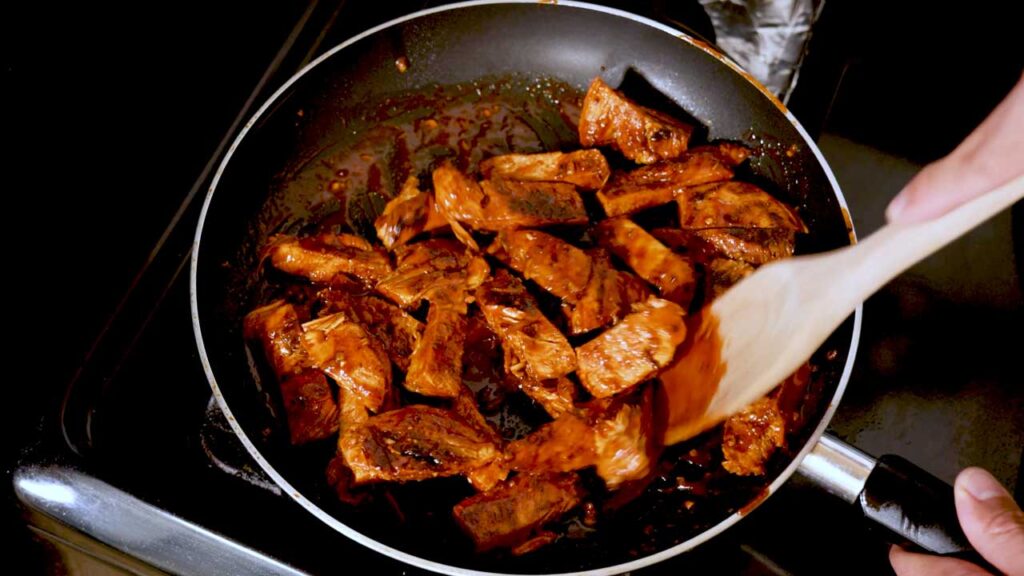
- Pour the reserved clean half of the marinade (the portion that never touched raw chicken) into the skillet and bring it to a gentle simmer over medium low heat.
- Add the sliced chicken breasts to the pan, turning to coat them in the sticky gochujang sauce.
- Garnish with sesame seeds, then remove from the skillet.
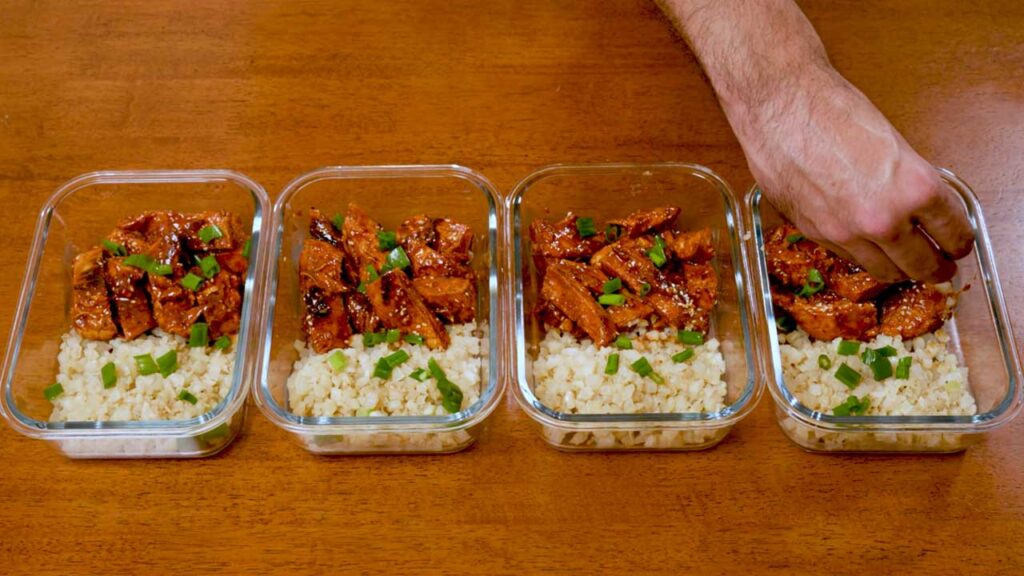
- Divide the cauliflower rice evenly between 4 containers. Then add the sliced saucy chicken, spooning any extra sauce over the top.
- Garnish each container with sliced green onions.
- Let the meals cool to room temperature before sealing the containers; refrigerate for up to 4 days.