
How Much Protein Do You Need Per Day?
This post may contain affiliate links. If you purchase through my links, I may earn a small commission at no extra cost to you.
When it comes to how much protein you need per day, you’ve probably heard this before: 0.8 grams per kilogram of body weight. You have probably seen it on a supplement label, heard it at the gym, or found it buried in a Google search. I know I personally have. So, that has been the official U.S. protein recommendation for over 70 years. Here’s the thing though. That number was never meant to be an optimal target for your daily protein intake. It was a floor designed to keep people from getting sick.
The 2025 to 2030 Dietary Guidelines for Americans just raised that number to 1.2 to 1.6 grams per kilogram for the first time in the guideline’s history. That is a 50 to 100 percent increase over what we have been told for decades. The Stanford experts who advised on the change say the science did not actually shift. It was a policy reclassification based on years of accumulated evidence that the old number left too many people shortchanged, especially as they age or try to build muscle.
So, how much protein do you really need then? I know you probably want a simple straight answer, but the reality is it depends on your goals, your activity level, and whether you are actually doing the resistance training that makes protein matter in the first place. I’ll breaks down what the current research says, who might need more, and which protein myths are just that: myths (that also need to go away).

What This Covers
- Why the old 0.8 g/kg recommendation was a deficiency floor, not an optimal target
- What changed in the 2025 to 2030 Dietary Guidelines and why it matters
- How your actual protein needs shift based on muscle building, fat loss, and age
- The three most persistent protein myths that refuse to die
- Why where your protein comes from matters just as much as how much you eat
The Old RDA Was Never Meant to Be a Target
The 0.8 grams per kilogram recommendation has been baked into U.S. nutrition policy since the 1980s, when it was calculated through controlled nitrogen balance studies. Researchers basically measured how much protein people needed to stay in nitrogen equilibrium, meaning they were neither losing nor gaining protein tissue. They set the official number at 0.66 grams per kilogram, then added 20 percent on top to cover 98 percent of healthy adults. The result: 0.8 g/kg, or about 55 grams per day for a 150-pound person.
The problem is that this was designed as a deficiency floor. It was the minimum amount needed to keep most people from falling into protein malnutrition, not the amount needed to optimize muscle maintenance, satiety, or body composition over a lifetime. Christopher Gardner, PhD, director of nutrition studies at Stanford Prevention Research Center, put it plainly when the new guidelines dropped: there was no single new study that proved the old RDA wrong. The shift came from years of accumulated evidence showing that the floor was too low for a lot of people’s actual needs.
This distinction matters because most people have treated the RDA as a daily goal rather than a bare minimum. You will still see it referenced on supplement labels, in fitness magazines, and even in some medical guidance. But it was always meant to prevent deficiency, not to help people thrive.
The New Guidelines: A 50 to 100 Percent Jump
The 2025 to 2030 Dietary Guidelines for Americans officially raised the recommended protein intake to 1.2 to 1.6 grams per kilogram of body weight. For a 150-pound adult, that translates to 80 to 110 grams per day. This is the first time the guideline has ever been increased since it was first established, and the jump is significant enough that it changes the conversation for most Americans.
The new recommendation aligns much more closely with what sports nutrition organizations like the International Society of Sports Nutrition have been recommending for years. It also reflects a growing body of research showing that higher protein intake supports better muscle protein synthesis, helps preserve lean mass during weight loss, and becomes increasingly important as we age.
According to NHANES data from the USDA, adult men in the U.S. already consume 90 to 100 grams of protein per day, and women consume 65 to 75 grams. Most Americans are already meeting or exceeding the new guidelines without trying.
That last point is worth sitting with. The new guidelines are not a radical departure that only applies to bodybuilders or athletes. For the average person who already eats a standard American diet, the shift is more of a validation than a wake-up call.

Your Actual Needs Depend on Your Goals
The new 1.2 to 1.6 g/kg range is a solid baseline for the general adult population, but your personal target may sit higher or lower depending on what you are trying to accomplish and how active you are.
For muscle gain: Research consistently supports 1.6 to 2.2 grams per kilogram (0.7 to 1.0 grams per pound) of body weight for people doing regular resistance training, and that is the straight answer to how much protein to build muscle. In the per kilo terms the research uses, that protein per kg for muscle gain range shows up across multiple meta-analyses, including one published in Advances in Nutrition. The key word there is resistance training. Without that stimulus, piling on extra protein beyond the baseline recommendation does not magically build muscle. But when you are lifting consistently, a meal like my Southwest Chicken Salad Meal Prep makes hitting those numbers straightforward.
For fat loss: The same 1.6 to 2.2 g/kg range applies here as well. Higher protein intake during a calorie deficit helps preserve lean muscle mass while you shed body fat. This is one of the most well-supported findings in sports nutrition research, and it is why I tend to recommend leaning into higher protein recipes like my Mixed Berry Protein Shake when someone is trying to lose weight.
For older adults (50 and above): The PROT-AGE Study Group recommends 1.0 to 1.2 g/kg for older adults to maintain muscle mass and function. Some studies suggest 1.2 to 1.6 g/kg may be even more beneficial for those over 65, as the aging body becomes less efficient at processing protein. Stanford Lifestyle Medicine specifically calls out this age group as one that benefits from a noticeable bump in daily protein intake.
Marilyn Oppezzo, a dietician at Stanford, quotes researcher Stuart Phillips with one of the best lines I have heard on this topic: “Protein isn’t the cake, exercise is. Protein is only a thin layer of frosting on the cake of resistance training.” Strength training is the biggest factor in preventing muscle loss as we age. Protein supports it, but it cannot replace it.

The Protein Myths That Refuse to Die
You’ve probably heard these ones before. Even with all the research out there, some protein myths keep resurfacing across social media, supplement marketing, and even casual fitness advice. Here are the three most persistent ones and what the evidence actually says.
Myth: You can only absorb 25 to 30 grams of protein per meal. This one shows up everywhere. The idea is that anything beyond 30 grams in a single sitting just gets wasted by your body. As someone who has done intermittent fasting for years, I can confirm I’ve had no issues eating just two large meals with more than 30 grams of protein per meal.
Studies published in journals like Clinical Nutrition have found no real difference in how the body metabolizes total daily protein whether it is spread across three to five meals or eaten in fewer, larger portions. For older adults specifically, splitting protein across meals does help ensure adequate intake throughout the day, but there is no hard metabolic cap at 30 grams.
Myth: You must drink a protein shake within 30 minutes of working out. The so-called anabolic window is one of the most aggressively marketed concepts in the fitness industry, and the science behind it has been thoroughly debunked. Research published in PubMed (PMC3879660, PMC5477153) shows the anabolic window is actually closer to 24 hours, not 30 minutes. Your total daily protein intake matters infinitely more than the timing of a single shake. If you want to optimize, eating protein around your workout window is fine. But rushing to chug a shake the second you put a dumbbell down? That is supplement marketing, not science. You can get those same results from a solid meal or even something like Protein Brownies if you prefer a snack route.
Myth: Plant proteins are “incomplete.” This idea has been debunked by Gardner et al. in Nutrition Reviews (2019). The notion that plant proteins lack essential amino acids and therefore cannot build muscle effectively has been around since the 1970s, but it does not hold up under scrutiny. A 2025 study found that vegan diets work just as well as omnivore diets for muscle building when total protein and calorie needs are met. The American College of Sports Medicine has also weighed in on this, confirming that plant-based protein sources are fully adequate for muscle repair and growth.
Where Your Protein Comes From Matters
Hitting your protein number is only half the equation. The other half is figuring out where that protein is coming from, and Harvard Health emphasizes this point more than most sources do.
Beef and processed meats will get you to your daily number quickly, but they come packaged with saturated fat and, in the case of processed meats, sodium that most people already get way too much of. Plant proteins tell a completely different story. They come bundled with fiber, vitamins, and phytochemicals that support overall health in ways isolated animal protein does not.
Consider the fiber situation: only 5 percent of Americans meet the recommended daily intake for fiber. Meanwhile, the average American consumes less than 10 grams of legumes per day. That is roughly one-third of a cup of beans. The gap between what most people eat and what they should be eating when it comes to plant-based protein sources is enormous, and closing even a small fraction of that gap would improve the diet quality of a significant portion of the population.
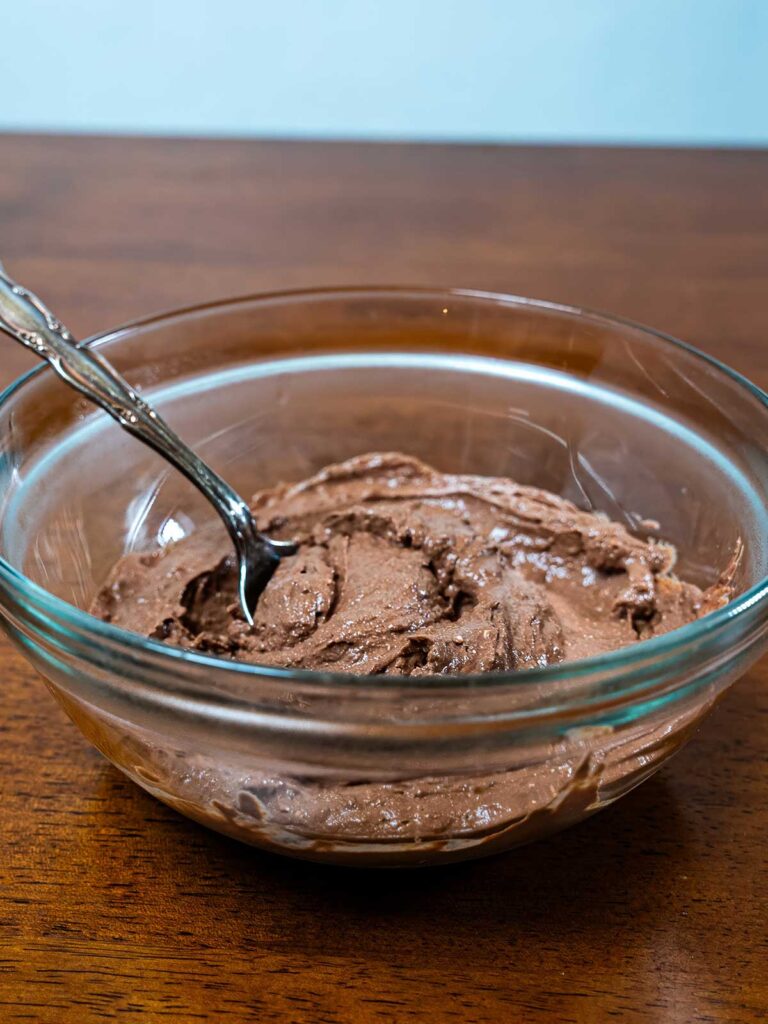
This is one reason why Flexible Feasts recipes lean heavily on Greek yogurt, and whey protein powder and cottage cheese whenever possible. A recipe like my Cottage Cheese Chocolate Mousse is a good example of packing protein into something that tastes like dessert, and my Cottage Cheese Mini Cheesecakes are another option that makes it easy to hit your protein target without much effort. They deliver the protein without the saturated fat baggage, and they often bring fiber and micronutrients to the table along the way.
The Short Version
- The old 0.8 g/kg RDA was a deficiency floor, not an optimal target, and has been in effect for over 70 years
- The new 2025 to 2030 Dietary Guidelines raise the recommendation to 1.2 to 1.6 g/kg, a 50 to 100 percent increase
- Most Americans already eat enough protein to meet the new guidelines without trying
- The protein per day to build muscle is 1.6 to 2.2 g/kg if you lift regularly, and the same range preserves lean mass while you lose fat
- Where your protein comes from matters just as much as how much you eat, with plant sources offering additional health benefits
Before You Apply This
-
Calculate your baseline first
Multiply your body weight in kilograms by 1.2 to get the minimum of the new guideline range. If you lift weights regularly or are trying to lose fat, aim for the higher end between 1.6 and 2.2 g/kg instead.
-
Don’t obsess over per-meal limits
Your body does not cap protein absorption at 30 grams per meal. Focus on hitting your total daily target across however many meals you eat. Splitting protein helps older adults stay consistent, and a simple High Protein Greek Yogurt Bowl is an easy way to hit that mark at breakfast. There is no hard metabolic ceiling.
-
Prioritize resistance training alongside protein
Stanford researcher Stuart Phillips puts it best: protein is only a thin layer of frosting on the cake of resistance training. Strength training is the single biggest factor in preventing muscle loss as you age. Protein supports the process but cannot replace it.
-
Load up on plant proteins
The average American eats less than 10 grams of legumes per day. Even a modest increase in beans, lentils, and other plant sources adds fiber and micronutrients that animal protein does not provide. Only 5 percent of Americans currently meet the daily fiber recommendation.
-
Keep the upper limit in mind
Chronic intake above 2 grams per kilogram per day may cause digestive, renal, and vascular issues. The research is clear on this: more is not always better, and there is a ceiling where extra protein starts causing problems rather than preventing them.
FAQs
-
How much protein do I need per day in grams?
Multiply your body weight in kilograms by 1.2 to get the new guideline minimum. A 150-pound person weighs about 68 kilograms, which puts them at roughly 80 grams per day. If you lift weights or are trying to lose fat, aim for 1.6 to 2.2 g/kg, which would be about 110 to 150 grams for that same person.
-
Is the old 0.8 grams per kilogram protein recommendation still valid?
It is still listed in some older resources, but the 2025 to 2030 Dietary Guidelines for Americans officially raised the recommendation to 1.2 to 1.6 g/kg. The old number was designed as a deficiency floor, not an optimal target, and it has been in effect for over 70 years without being updated until now.
-
Do you really only absorb 30 grams of protein per meal?
No. Studies published in Clinical Nutrition have found no difference in how the body metabolizes total daily protein whether it is spread across three to five meals or eaten in fewer, larger portions. There is no hard metabolic cap at 30 grams per sitting.
-
Do you need to drink a protein shake within 30 minutes of working out?
No. Research published in PubMed shows the anabolic window is closer to 24 hours, not 30 minutes. Your total daily protein intake matters far more than the timing of a single shake. Eating protein around your workout window is fine, but there is no urgent race against the clock.
-
How much protein does the average American actually eat?
According to NHANES data from the USDA, adult men consume 90 to 100 grams of protein per day and women consume 65 to 75 grams. Most Americans already meet or exceed the new guidelines without making any effort to do so.
-
Is plant protein as good as animal protein for building muscle?
Yes. A 2025 study found that vegan diets work just as well as omnivore diets for muscle building when total protein and calorie needs are met. The myth that plant proteins are incomplete has been debunked by multiple studies, including work published in Nutrition Reviews by Gardner et al.
-
How much protein do older adults need?
The PROT-AGE Study Group recommends 1.0 to 1.2 g/kg for adults over 50 to maintain muscle mass and function. For those over 65, some studies suggest 1.2 to 1.6 g/kg may be more beneficial since the aging body becomes less efficient at processing protein.
-
What is the maximum amount of protein you should eat per day?
Chronic intake above 2 grams per kilogram per day may cause digestive, renal, and vascular issues and should be avoided. There is a point where extra protein stops providing benefits and starts causing problems.
-
How much protein in 1 egg?
About 6 grams in a large whole egg, which is why egg-based breakfasts do so much of the protein work in my own kitchen. Two eggs get you to 12, and pairing them with a cup of Greek yogurt or a handful of cottage cheese turns breakfast into a proper anchor. If you’re counting liquid egg whites instead, a half cup of them adds about 13 grams.
Recipes to Go With This
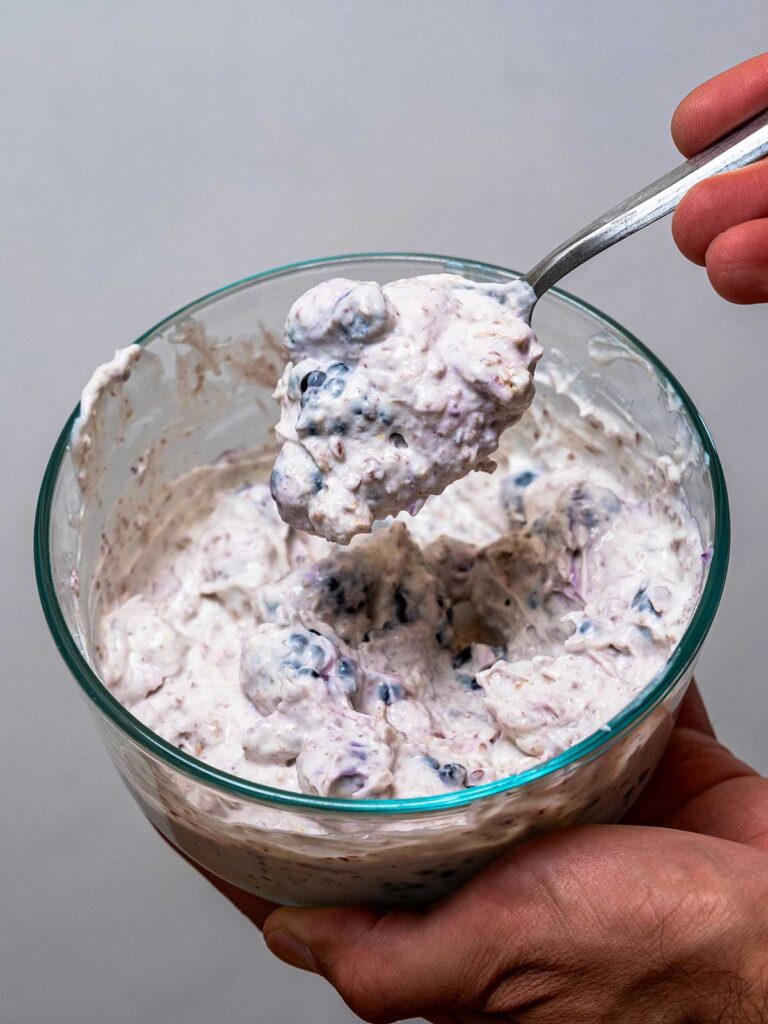
- Banana Cream Protein Overnight Oats
A high-protein breakfast that makes hitting your morning protein target easy and delicious. - Banana Oatmeal Protein Cookies
A dessert that delivers serious protein without the sugar crash, perfect for post-workout snacking. - Chicken Avocado Wrap
A practical lunch option that shows how to pack protein into everyday meals without complicated prep.
Take This Further
Now that you know what the research actually says about protein needs, the next step is putting that knowledge into practice with recipes that make hitting your daily target feel effortless. Check out the full recipe collection for high-protein meals, desserts, and breakfasts designed to fit into a real life.
Sources:
- Stanford Medicine News – “How much protein should we really be eating? Five things to know”
- Harvard Health Publishing – “How much protein do you need every day?”
- American Heart Association – “Protein: What’s Enough?”
- NIH/NCBI – “Protein for Life: Review of Optimal Protein Intake”
- Advances in Nutrition – “Optimizing Protein Intake in Adults”
- PubMed – “Dietary protein intake and human health”
- USDA/ARS – NHANES Dietary Data Briefs on Protein Intake of Adults
- Stanford Lifestyle Medicine – “Protein Needs for Adults 50+”