
High Protein Foods List
This post may contain affiliate links. If you purchase through my links, I may earn a small commission at no extra cost to you.
Since cooking for so many years now, I keep a running mental list of high-protein foods at the grocery store. It’s mainly because having a go-to list makes it easier to build meals that actually keep me full throughout the day while saving money. If you’re trying to hit higher protein without reaching for a shake every time, this list is the reference I wish I had when I started. It also doubles as a protein foods list for weight loss, because the same anchor foods work in both directions.
This covers 42 everyday high-protein foods organized by category, with the protein content per 100 grams, calories, typical serving sizes, and approximate grocery costs so you can plan around your budget. Everything comes straight from USDA nutrition data.
Some of these are obvious picks like chicken breast and Greek yogurt. Others, like cottage cheese and lentils, fly under the radar even though they give you serious protein for the money. My goal is having one place to help you look up what works best for you before you start building a meal.

What You’re Getting Out of This
- A complete list of 42 high-protein foods with protein grams, calories, serving sizes, and estimated costs
- Foods organized by category so you can quickly find what fits your diet and shopping habits
- The most protein-dense options in each food group for meal planning
- Budget-friendly high-protein picks that give you the most protein per dollar
- How to mix and match categories to hit your daily protein target
Meat & Poultry
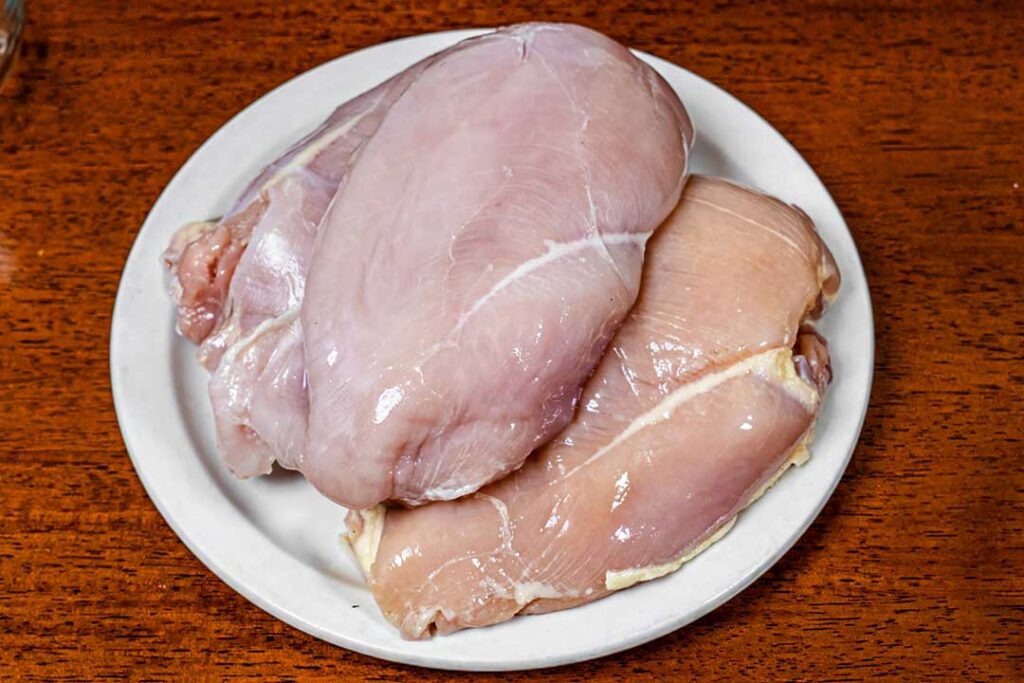
Poultry and lean meats are the most straightforward way to hit high protein at any meal. A single serving of chicken breast covers most of your daily value on its own, and ground turkey or lean beef gives you flexibility for everything from stir-fries to casseroles. These are the workhorses of any high-protein eating plan. A cooked chicken breast is the ingredient in my Italian Herb Chicken, and it covers a big chunk of your daily protein in one sitting.
| Food | Protein (per 100g) | Calories (per 100g) | Common Serving | Protein per Serving | Approx. Cost |
|---|---|---|---|---|---|
| Meat & Poultry | |||||
| Chicken breast, cooked | 31g | 165 | 1 breast (172g) | 53g | $3-$5/lb |
| Turkey breast, cooked | 29g | 135 | 1 breast (170g) | 49g | $4-$6/lb |
| Ground turkey, lean (93/7), cooked | 27g | 176 | 4 oz (113g) | 30g | $3.85/lb |
| Lean ground beef (95/5), cooked | 21g | 198 | 4 oz (113g) | 24g | $5.50-$7/lb |
| Sirloin steak, lean, cooked | 29.5g | 190 | 4 oz (113g) | 33g | $6-$9/lb |
| Pork tenderloin, lean, cooked | 29g | 140 | 4 oz (113g) | 33g | $3-$5/lb |
| Lamb leg, lean, cooked | 25g | 213 | 4 oz (113g) | 28g | $8-$12/lb |

Fish & Seafood
Fish and seafood give you high protein with a different nutritional profile than land animals. White fish like cod and tilapia are among the lowest calorie protein sources available, while salmon adds healthy omega-3 fats along with the protein. Canned tuna is the budget option that keeps me stocked for quick lunches. Salmon is a bit pricier but it’s the main ingredient in my easy One Pan Salmon & Veggies, which is one of my go-to weeknight dinners when I want something low carb and simple.
| Food | Protein (per 100g) | Calories (per 100g) | Common Serving | Protein per Serving | Approx. Cost |
|---|---|---|---|---|---|
| Fish & Seafood | |||||
| Tuna, cooked | 30g | 132 | 1 fillet (170g) | 51g | $1.50-$3/can (canned) |
| Salmon, cooked | 25.4g | 208 | 1 fillet (170g) | 43g | $8-$12/lb |
| Cod, cooked | 22.8g | 82 | 1 fillet (180g) | 41g | $7-$10/lb |
| Tilapia, cooked | 26.2g | 96 | 1 fillet (170g) | 45g | $5-$7/lb |
| Shrimp, cooked | 24g | 99 | 1 cup (180g) | 43g | $8-$12/lb |
| Halibut, cooked | 22.5g | 111 | 1 fillet (159g) | 36g | $10-$14/lb |
| Haddock, cooked | 20g | 90 | 1 fillet (170g) | 34g | $6-$9/lb |

Eggs & Dairy
Eggs and dairy are the easiest high-protein foods to have on hand at all times. They keep in the fridge for days or weeks, require minimal prep, and work for breakfast, snacks, or mixing into recipes. Greek yogurt and cottage cheese are the hidden gems here. You get a solid protein hit from a container you can eat straight, and they blend into smoothies or recipes without changing the flavor much. If you want a really easy starting point, my High Protein Greek Yogurt Bowl puts together a quick breakfast that uses yogurt as the base.
| Food | Protein (per 100g) | Calories (per 100g) | Common Serving | Protein per Serving | Approx. Cost |
|---|---|---|---|---|---|
| Eggs & Dairy | |||||
| Eggs, whole, cooked | 12.5g | 143 | 1 large egg (50g) | 6g | $2.50-$4/dozen |
| Egg whites, cooked | 10.9g | 52 | 1/2 cup liquid (120g) | 13g | $3-$5/carton |
| Greek yogurt, nonfat | 10g | 59 | 1 cup (227g) | 23g | $4-$6/32 oz |
| Cottage cheese, low-fat | 11g | 72 | 1 cup (226g) | 25g | $2-$3/16 oz |
| Skim milk | 3.4g | 34 | 1 cup (245g) | 8g | $3-$4/gallon |
| Parmesan cheese | 35.8g | 420 | 1 oz (28g) | 10g | $6-$10/lb |
| Mozzarella cheese, part-skim | 22.9g | 254 | 1 oz (28g) | 6.4g | $4-$6/lb |

Plant-Based & Legumes
Legumes and soy products are where plant-based protein gets practical. Firm tofu and tempeh give you protein numbers that compete with meat on a per-serving basis, while lentils and beans add fiber that keeps you full longer than animal protein alone. If you’re looking to cut costs without cutting protein, this category is where you start. A bag of dry lentils costs a few dollars and lasts for weeks. If you’re looking for a slow cooker meal that leans on these ingredients, my Slow Cooker Chicken & Lentil Soup combines lentils with chicken for a filling dump-and-go meal.
| Food | Protein (per 100g) | Calories (per 100g) | Common Serving | Protein per Serving | Approx. Cost |
|---|---|---|---|---|---|
| Plant-Based & Legumes | |||||
| Lentils, cooked | 9g | 116 | 1 cup (198g) | 18g | $1.50-$2.50/lb (dry) |
| Black beans, cooked | 8.9g | 132 | 1 cup (172g) | 15g | $1-$1.50/can |
| Garbanzo Beans (Chickpeas), cooked | 8.9g | 164 | 1 cup (164g) | 15g | $1-$1.50/can |
| Firm tofu | 17.3g | 144 | 1/2 cup (126g) | 22g | $1.50-$3/package |
| Tempeh, cooked | 19g | 193 | 3/4 cup (130g) | 25g | $2.50-$4/package |
| Edamame, cooked | 11g | 121 | 1 cup (155g) | 17g | $2-$3/lb (frozen) |

Nuts & Seeds
Nuts and seeds pack a lot of protein into small servings, though they come with higher calorie counts from their natural fat content. They work best as additions to meals and snacks rather than your primary protein source. Pumpkin seeds have the highest protein-to-weight ratio in this group, while peanuts are the most budget-friendly option by far.
| Food | Protein (per 100g) | Calories (per 100g) | Common Serving | Protein per Serving | Approx. Cost |
|---|---|---|---|---|---|
| Nuts & Seeds | |||||
| Peanuts | 25.8g | 567 | 1 oz (28g) | 7g | $3-$5/lb |
| Almonds | 21.2g | 579 | 1 oz (28g) | 6g | $7-$10/lb |
| Pumpkin seeds | 30.2g | 559 | 1 oz (28g) | 8.5g | $5-$8/lb |
| Chia seeds | 16.5g | 486 | 2 tbsp (28g) | 4.6g | $4-$7/lb |
| Sunflower seeds, dry roasted | 20.8g | 588 | 1 oz (28g) | 5.8g | $4-$6/lb |
| Hemp seeds, shelled | 16.7g | 553 | 3 tbsp (20g) | 3.3g | $5-$8/lb |
| Pistachios, dry roasted | 20.2g | 562 | 1 oz (28g) | 5.7g | $6-$9/lb |

Grains
Grains are not typically thought of as protein foods, and they don’t have the same concentration as meats or legumes. However, they contribute meaningful protein when they form the base of a meal. Quinoa is a complete protein containing all essential amino acids, which is rare for a grain. Oats add up over the course of a week if you eat them regularly for breakfast. My Cottage Cheese Overnight Oats combines oats with cottage cheese for a breakfast that stacks protein from two categories at once. Whole wheat bread is also a healthier bread option that adds protein with every sandwich you make.
| Food | Protein (per 100g) | Calories (per 100g) | Common Serving | Protein per Serving | Approx. Cost |
|---|---|---|---|---|---|
| Grains | |||||
| Quinoa, cooked | 4.4g | 120 | 1 cup (185g) | 8g | $3-$5/lb (dry) |
| Oats, cooked | 3.1g | 71 | 1 cup (234g) | 7g | $1.50-$3/lb |
| Whole wheat bread | 13g | 247 | 2 slices (56g) | 7g | $2-$4/loaf |
| Whole wheat pasta, cooked | 5.3g | 124 | 1 cup (140g) | 7.4g | $1.50-$3/box |
| Brown rice, cooked | 2.7g | 123 | 1 cup (195g) | 5.3g | $1-$2/lb |
| Barley, cooked | 2.3g | 123 | 1 cup (157g) | 3.6g | $1.50-$3/lb |
What About Fruit?
None of the fruit in a produce aisle will move your protein number on its own. The high-protein fruits to look for are guava, jackfruit, and figs, which land around 1 to 3 grams per 100 grams, with dried figs at the top of that range. The practical play is to treat fruit as the top half of a snack. A cup of berries or guava with Greek yogurt or cottage cheese turns it into a 20 plus gram snack that still tastes like fruit.
The Short Version
- Chicken breast, tuna, and lean beef give you the most protein per serving of any common food, with 25 to 35 grams per 100 grams
- White fish like cod and tilapia deliver high protein at under 100 calories per 100 grams, making them the leanest options on this list
- Greek yogurt, cottage cheese, and eggs are the most convenient high-protein staples you can keep on hand with zero prep
- Lentils, beans, and tofu give you solid protein at the lowest cost per serving, especially when bought dry or in bulk
- Mixing protein from multiple categories throughout the day makes hitting 120 to 150 grams feel natural instead of forced
My Tips For You Guys
-
Buy Dry Beans and Lentils in Bulk
Dry legumes cost a fraction of canned and give you more servings per pound. Soak them overnight and cook a big batch on the weekend. They keep in the fridge for about a week or freeze perfectly for later.
-
Frozen Fish Beats Fresh on Price and Waste
Frozen salmon, tilapia, and cod fillets cost less than fresh and don’t spoil if you forget about them in the freezer. The protein content is identical to fresh, and the texture difference is minimal with proper thawing.
-
Egg Whites Multiply Your Protein Cheaply
A carton of liquid egg whites costs about the same as whole eggs and lets you boost the protein in omelets, scrambled eggs, or baked recipes without adding much fat or extra calories. I mix them with whole eggs for the best of both textures.
-
Pork Tenderloin Is the Budget Steak Alternative
Pork tenderloin has the same protein per gram as chicken breast at a lower calorie count and usually a better price per pound. It cooks in under 30 minutes and works with the same seasonings you’d use on chicken.
-
Start With the Lean Anchors
If you’re picking high protein foods for weight loss, anchor the meal around egg whites, white fish, chicken breast, or Greek yogurt and build the rest of the plate around that. You keep the protein high and the calories in a range you can actually control.
FAQs
-
What is the highest protein food per 100 grams?
Parmesan cheese has the highest protein density on this list at 35.8 grams per 100 grams, followed by lean beef top round at 35.6 grams and chicken breast at 31 grams. However, parmesan is calorie-dense at 420 calories per 100 grams, so you typically eat it in smaller portions.
-
What is the cheapest high-protein food per serving?
Dry lentils and canned beans are the most budget-friendly options at roughly $0.50 to $0.80 per serving. Eggs come in close at about $0.25 to $0.35 per egg, and a carton of liquid egg whites gives you multiple high-protein servings for under $4.
-
Can you hit high protein goals with just plant-based foods?
Yes it is absolutely possible but it requires combining different sources throughout the day since individual plant foods have lower protein per serving than animal foods. A day with tofu for breakfast, lentils for lunch, black beans for dinner, and a handful of almonds as a snack easily reaches 80 to 100 grams. The key is eating enough volume and variety.
-
What is the lowest calorie high-protein food?
Egg whites are the lowest at 52 calories per 100 grams with 10.9 grams of protein. White fish like cod (82 calories per 100 grams) and tilapia (96 calories per 100 grams) are also extremely lean. If you’re counting calories and trying to maximize protein, these are your best starting points.
-
Do these foods work for building muscle?
Yes, because high protein foods for muscle gain start from the same list you’re looking at. The dense anchors are chicken breast, salmon, whole eggs, Greek yogurt, and cottage cheese, and they pair with a daily target around 0.7 to 1 gram of protein per pound of body weight plus two to three strength sessions a week. This list covers the food side of that equation, with the grams to plan from.
Recipes to Go With This
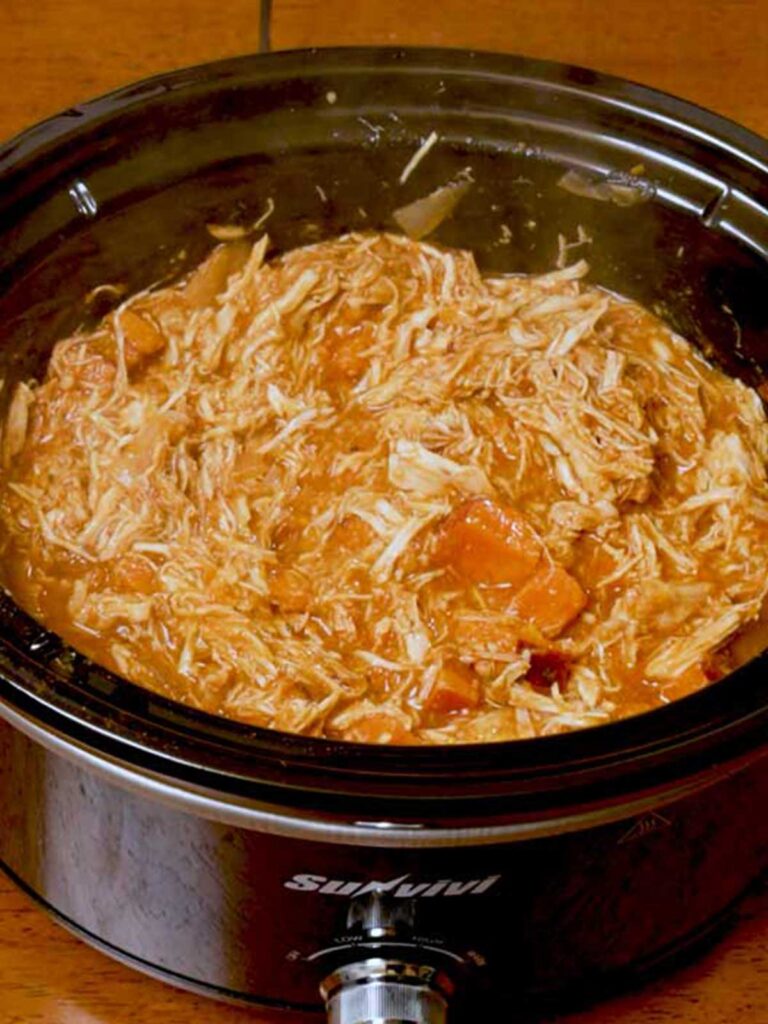
If you want to put some of these foods to use right away, there are a few recipes on the site that work well with this list. My Slow Cooker BBQ Chicken & Sweet Potatoes is a dump-and-go meal that layers chicken breast with lean protein and filling carbs. The Mixed Berry Protein Smoothie is a fast option that uses Greek yogurt and protein powder for a quick breakfast or post-workout drink. And the Coconut Curry Brown Rice shows how a grain like brown rice can be the base of a meal that still adds a bit of protein but a lot of flavor to your meal.
Try These Next
Pick three foods from this list that you don’t currently eat regularly and add them to your next grocery trip. Building a rotation of go-to protein sources makes meal planning feel automatic instead of something you have to think about each week.