Fried Rice
This post may contain affiliate links. If you purchase through my links, I may earn a small commission at no extra cost to you.
This flavorful fried rice recipe takes everything you love about takeout and rebuilds it with a healthier profile. You get fluffy, flavorful rice cooked in vegetable broth instead of water, layered with garlic, ginger, and a kick of sriracha. It comes together in one skillet and is one to have on your short list of delicious quick dinner recipes.

What Makes This Actually Good
- Cooking the rice in vegetable broth instead of water builds deep flavor from the very first grain, giving you a richer base than plain boiled rice. The Chicken Fajitas uses a similar one-pan approach for a weeknight dinner that requires minimal cleanup.
- Frying the garlic and ginger in olive oil before adding the vegetables creates a flavor layer that most quick fried rice recipes skip entirely.
- Turmeric powder gives the rice a warm, golden color and an earthy undertone without needing soy sauce as the primary seasoning.
- The lemon juice added at the end brightens everything up and cuts through the richness so each bite doesn’t taste the same.
- Eggs and peas and carrots add protein and fiber in the same pan, keeping prep minimal while making each serving more filling.
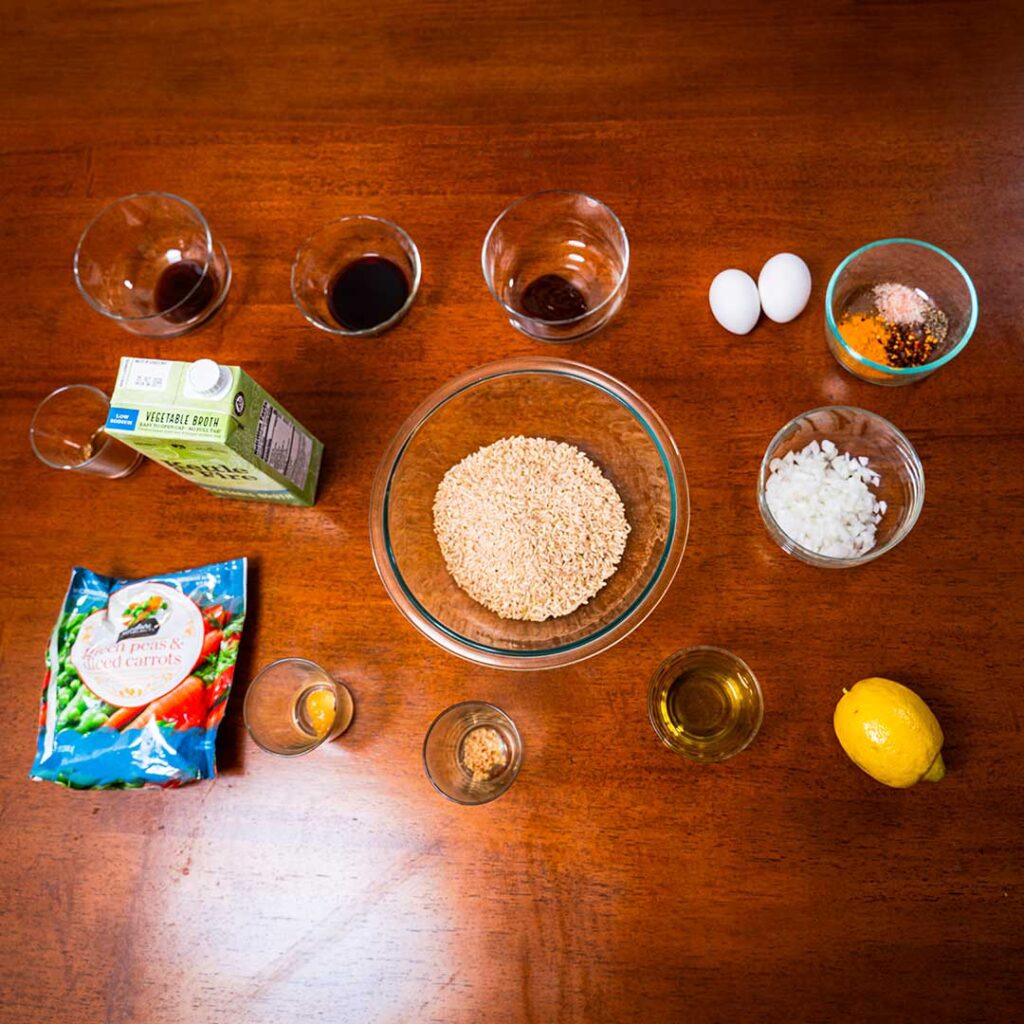
Fried Rice Ingredients
- Olive Oil. The cooking fat for sauteing the onions, garlic, and ginger. It has a high smoke point and adds a light fruitiness that works well with the Asian-inspired seasonings.
- Long Grain Rice. The base of the recipe. Standard long grain rice works great here and gives you that fluffy, separate-grain texture.
- Vegetable Broth. This is where the real flavor comes from. Cooking the rice in broth instead of water means every grain absorbs savory depth from the start.
- Eggs. Scrambled into the skillet and folded in at the end. They add protein and help make each serving more satisfying.
- White Onion. Diced and sauteed until softened. The foundation aromatic for the whole dish.
- Garlic. Minced and cooked briefly with the ginger. Essential for that classic fried rice aroma.
- Ginger. Fresh minced ginger adds a bright, slightly spicy note that pairs well with the turmeric and sriracha.
- Turmeric Powder. Gives the rice its signature golden color and adds a warm, earthy undertone. You won’t taste it overpowering the dish.
- Red Chili Flakes. Optional heat element. Add them during cooking for a steady background warmth.
- Peas and Carrots. The classic frozen vegetable mix for fried rice. They cook quickly and add sweetness that balances the spice.
- Soy Sauce. Adds saltiness and umami to tie all the seasonings together. Low-sodium version keeps things from getting too salty.
- Oyster Sauce. A thick, savory sauce that gives fried rice its signature depth. Skip it for a vegetarian version.
- Sesame Oil. A few teaspoons added at the end. It’s a finishing oil that adds a nutty aroma.
- Sriracha Sauce. Yellowbird Blue Agave Sriracha works great here. Adds a sweet heat that ties the whole flavor profile together.
- Lemon. Fresh juice squeezed over the finished rice. It brightens everything up and keeps the flavors from tasting flat.
- Salt and Black Pepper. A basic pinch to round out the seasoning.
- Sliced Green Onions. Garnish on top for a fresh, crisp finish.
Reasons This Will Become a Regular
- Cooking rice in vegetable broth instead of water is a simple swap that completely changes how the dish tastes from the first bite.
- Everything comes together in one large skillet, which means minimal cleanup and a straightforward cooking process you can do on any weeknight.
- The flavor profile hits all the right notes: savory from the broth and oyster sauce, warm from turmeric and ginger, with a touch of heat from sriracha.
- You can easily scale this up for meal prep. It reheats well and the flavors actually get better after sitting in the fridge overnight. The Southwest Chicken Salad Meal Prep follows the same make-on-Sunday-eat-all-week strategy with a similar container-friendly approach.
- The lemon juice at the end makes a real difference. It adds brightness that most fried rice recipes are missing and keeps every bite from tasting the same.
- It uses affordable, everyday ingredients you can find at any grocery store, so there are no hard-to-find pantry staples in this.
- Eggs and peas and carrots add protein and fiber to each serving, so this fried rice with egg is more filling than standard takeout versions.

How to Round Out the Meal
- A simple side salad with light vinaigrette. Keeps the meal from feeling too heavy and adds some fresh crunch.
- Steamed broccoli or bok choy. If you want more greens on the plate, these both cook in under 5 minutes and pair naturally with the flavor profile.
- Grilled chicken or shrimp. For an extra protein boost, add a side of grilled meat to make this a full muscle-building meal. The Sweet Potato BBQ Shepherd’s Pie is another comfort food option that works just as well as a satisfying main course.
- Crispy spring rolls. If you’re going for a takeout-night vibe at home, spring rolls on the side make it feel like a full spread.
Ways to Make This Yours
- Add chicken or shrimp. Sauté diced chicken breast or shrimp in the skillet before scrambling the eggs for a protein-packed version with about 15 grams per serving. The Air Fryer Korean Chicken Thighs follows a similar Asian-inspired flavor approach if you want to pair the fried rice with a matching main dish.
- Cauliflower rice swap. Replace the regular rice with riced cauliflower for a lower-carb, higher-fiber version that still tastes satisfying.
- Vegetarian oyster sauce. Swap regular oyster sauce for a mushroom-based vegetarian version and you get the same savory depth without any animal products.
- Double the heat. Add an extra teaspoon of sriracha and a diced jalapeño with the onions if you like your fried rice with more kick. If you want to explore that sriracha flavor profile further, the Honey Sriracha Meatballs builds an entire recipe around the same sweet-heat combination.
- Different vegetable mix. Swap peas and carrots for corn and bell peppers, or throw in whatever vegetables you have that need using before they go bad.
- Egg fried rice style. Scramble the eggs in the skillet first and pull them out before you work the rice, then stir the eggs back in at the end. You get small, distinct pieces of egg instead of scramble strips.
Things Worth Knowing
-
Rice Technique
Rinsing the rice under running water and patting it dry before cooking removes excess surface starch. This helps prevent clumping and gives you separate, fluffy grains instead of a sticky mass.
-
Pan Space
Make sure your skillet is large enough to hold all the rice when you add it. If it’s too crowded, the rice won’t mix well with the seasonings and you’ll end up with uneven flavor distribution.
-
Day-Old Rice Works Best
If you have leftover rice from the fridge, it works even better than freshly cooked rice. The drier grains fry up with a slightly firmer texture that most people prefer for fried rice.
-
Layer Your Aromatics
Cooking the garlic and ginger separately from the rice, then folding them back in at the end, gives you a more intense garlic flavor than if you just threw everything together at once.
-
Adjust the Heat
The red chili flakes and sriracha are both adjustable. Start with less if you’re not used to spice, then add more at the table to your liking.
FAQs
-
Can I use instant rice for this recipe?
You can, but the texture won’t be as good. Instant rice tends to get mushy and doesn’t fry well. If you’re in a pinch, it works in an emergency, but standard long grain rice gives you the best results.
-
Can I use frozen rice instead of freshly cooked?
Yes, frozen rice works fine and can actually save time. Just thaw it slightly and break up any clumps before adding it to the skillet. The key is making sure it’s hot and mixed well with the seasonings.
-
How long does fried rice last in the fridge?
It will keep for about 3 to 4 days in an airtight container. The flavors actually meld together nicely after sitting overnight, so leftovers often taste better the next day.
-
Can I make this ahead of time for meal prep?
Absolutely. This recipe reheats well in the microwave or back in a skillet. Portion it into containers after it cools and you have an easy high-protein lunch or dinner ready to go all week.
-
What can I use instead of oyster sauce?
A vegetarian mushroom oyster sauce works as a direct swap. You can also use a bit more soy sauce with a dash of Worcestershire sauce (check for anchovy content if you want fully vegetarian). The dish won’t taste exactly the same but it will still be good.
Equipment Needed

Recipe
Fried Rice
Ingredients
Directions
- . Rinse your rice under running water, pat dry to reduce some moisture and then add it to a large pot.
- Add your vegetable broth into the large pot and bring it to a boil.
- Cook your rice until the water is drained. Cooking time will depend on what type of rice you use so refer to your rice’s instructions.
- While your rice cooks, in a skillet, add a tablespoon of oil and your diced onion.
- Cook for about 5-7 minutes on medium heat.
- Add in your minced garlic and minced ginger and cook for 2-3 minutes. Once done, remove from the skillet.
- Beat two large eggs, and add to the skillet and scramble. Once done, remove from the skillet.
- Add your peas and carrots and cook for about 10-12 minutes until cooked. Once they’re cooked, add your onion and scrambled eggs and combine.
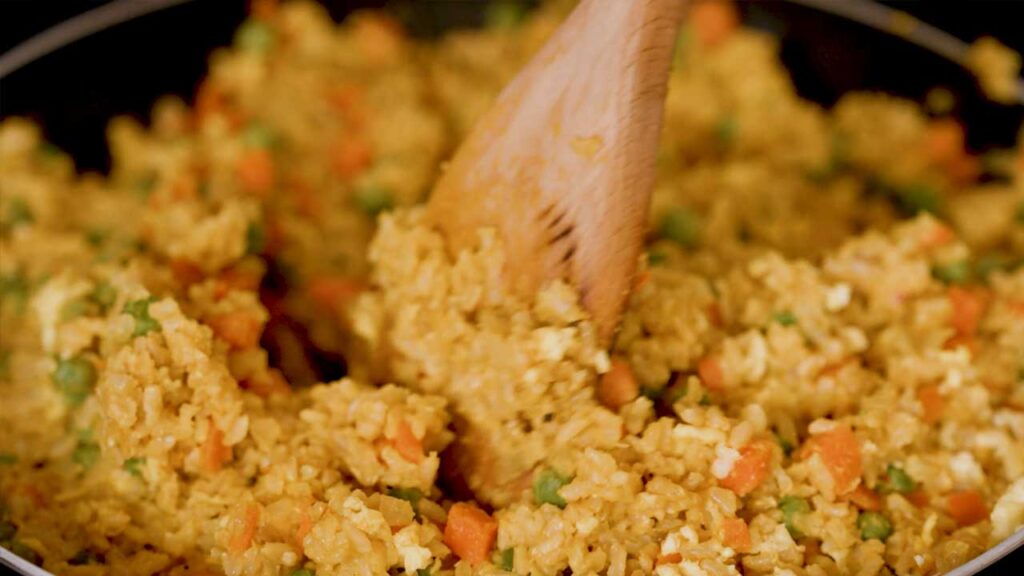
- Once done, add your cooked rice. Make sure to use a large enough skillet.
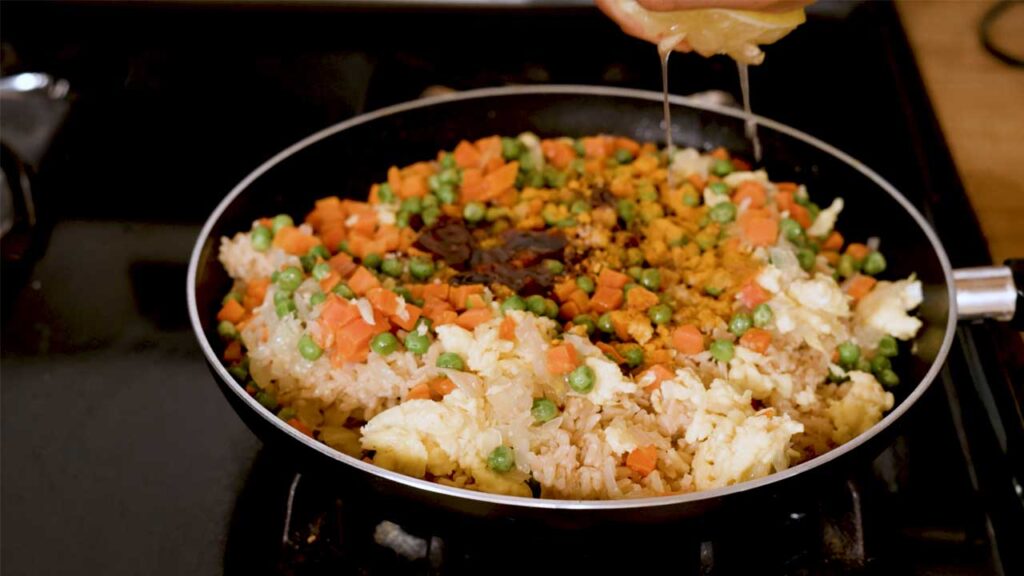
- Add your seasonings, soy sauce, oyster sauce, sesame oil, sriracha sauce and lemon juice and mix well.
- Cook on low for an additional 5-10 minutes to let the flavors meld together.
- Serve and garnish with sliced green onions